










How often authorities check
1%
sourcing from low-risk countries
3%
sourcing from standard-risk countries
9%
sourcing from high-risk countries, plus 9% of the product quantity
These are minimums. Checks are risk-based, cover non-SME downstream operators and traders too, and can be triggered at any time by a concern raised about a product.
Inspectors don't audit your policy in the abstract. They pick one statement and follow it back to the plot.
01
The authority picks you through its risk-based plan, or after a concern about a product. In Germany, an inspection starts from the reference number of a single statement.
02
You are asked for the evidence behind that statement and its shipment. In Germany this may mean uploading it through the authority's portal.
03
They check your due diligence system, and how you applied it to that shipment. A general procedure is not enough on its own.
04
Questions on gaps, a visit to your premises, or checks on plots and suppliers, including in the country of production.
Based on the dry-run inspections held in Belgium, France, Germany and the Netherlands. Everything has to link back to the specific shipment.
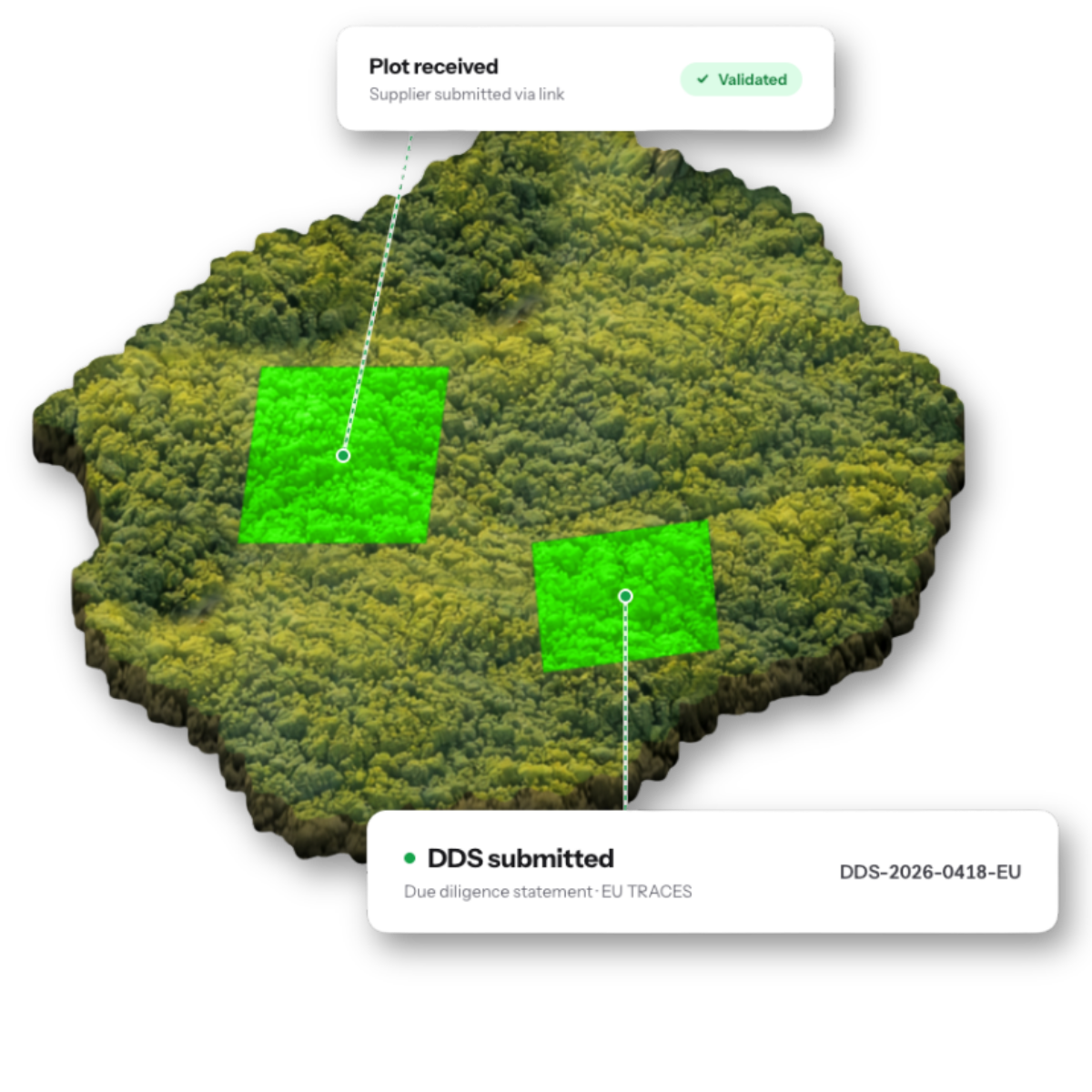
In Orbify: plots collected by supplier link and validated on upload
In Orbify: every plot screened against satellite imagery since 2020, results stored
In Orbify: the assessment is kept with the statement it supports
Self-check
Each “no” is a gap an inspector is likely to find. Most companies find their gaps in the first two lines.
Inspection-ready by default
In Orbify, each statement keeps its plots, satellite checks and risk assessment together. When an inspector asks about one reference number, you open one record instead of rebuilding the file.
What happens depends on how serious the gap is. The steps can be combined in one case.
While they check
The authority can stop the product from being placed on the market or exported until the check is finished.
To fix it
You fix the gap in your due diligence. Products can also be withdrawn or recalled, donated, or disposed of.
Penalties
Example: Germany's implementing act, passed by the Bundestag on 12 November 2026, sets fines of up to €100,000, and up to 4% of EU-wide turnover for larger companies.
From your application date: 30 December 2026 for medium and large companies, and 30 June 2027 for most micro and small ones. Authorities in several countries have already run practice inspections.
No. They check a share of operators each year, but each check goes deep: it follows one or a few specific shipments back to the plot, rather than reviewing your procedure in general.
Yes. Companies that are not SMEs are included in the annual checks, and all of them must be able to show who supplied them and who they sold to.
No. Certification and tools can supply evidence, but your company is the one inspected. Authorities expect to see how you used that evidence and the conclusions you reached.
Five years from the date of the statement.
This page explains the regulation in plain terms. It is not legal advice.
Related: The EUDR due diligence statement · EUDR geolocation requirements · EUDR deadlines

One call. We go through your products, your role and your suppliers, and tell you exactly what you have to do.